

Adolescent literacy
Adolescent literacy curriculum
In a study of seven middle schools, Reading Edge schools averaged a 24.6% gain on state reading assessments over three years. Control schools gained 2.2%.
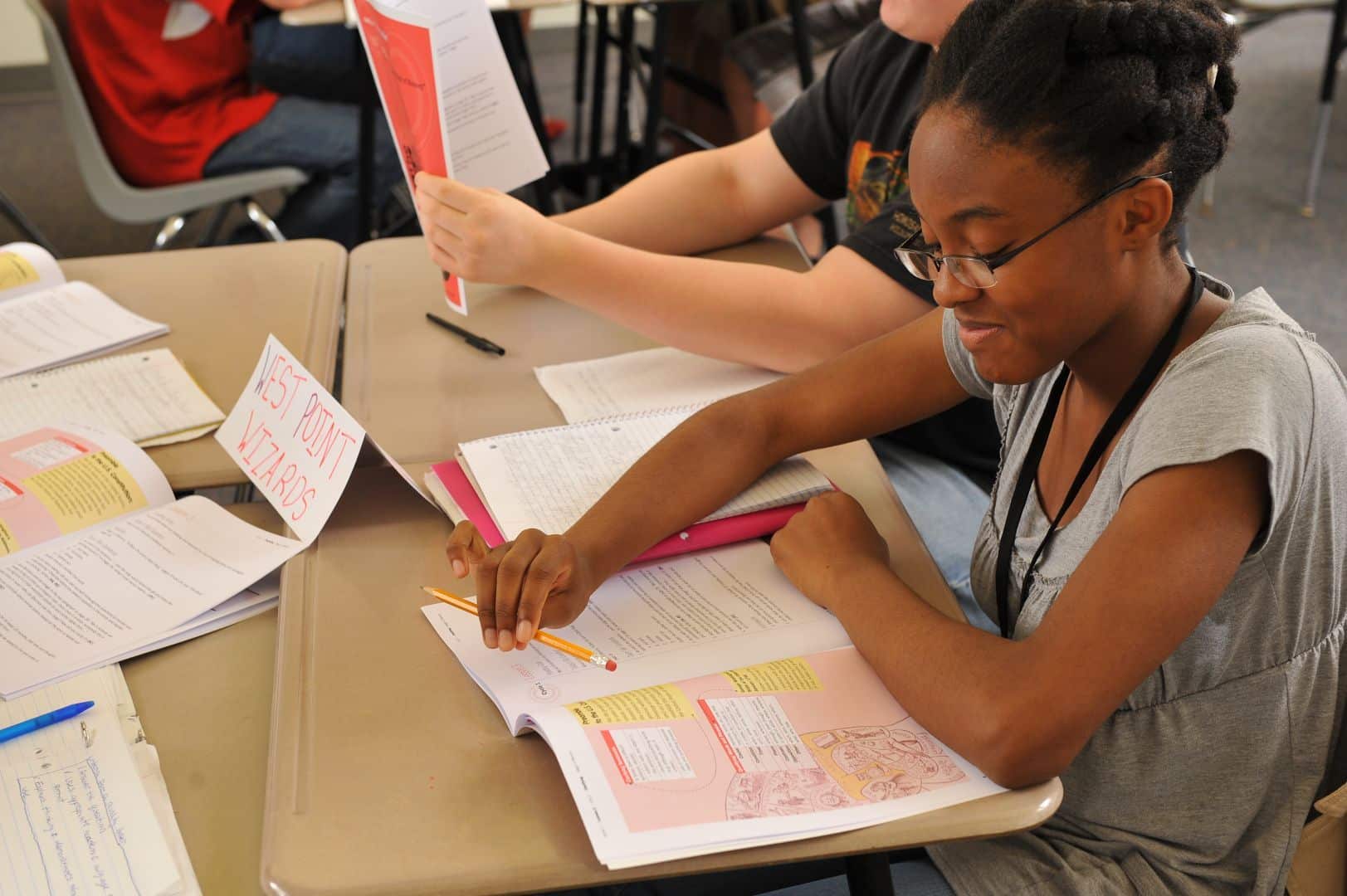
The Reading Edge is a comprehensive literacy curriculum for all adolescent learners, built for the full range of readers in a typical middle or high school: from students who are years behind to students ready for honors-level work.
Eight levels of instruction span the continuum from beginning through 8th-grade-plus reading levels. Students are grouped by reading level rather than grade, and regroup every quarter as they grow so instruction stays matched to where students actually are, not where the calendar says they should be.
The same evidence-based instructional framework that runs through SFA's entire PreK–adolescent system continues here.
Inside a Reading Edge lesson
Strategic reading
Four core comprehension strategies — clarifying, questioning, predicting, and summarizing — taught explicitly and practiced systematically across every level. Students learn to apply strategies independently and flexibly as they encounter increasingly complex texts.
Vocabulary and academic language
Vocabulary instruction embedded in every lesson, tied directly to the texts students are reading. Academic language — the language of subject-area content — is developed intentionally so students can access complex texts across every class.
Knowledge building
High-interest fiction, nonfiction, short stories, novels, and poetry chosen to build background knowledge and wide reading experience. Every level includes texts appropriate to students' age and interests, regardless of reading level.
Writing and communication
Students write in response to reading in every lesson cycle, developing the ability to articulate thinking, support claims with evidence, and communicate clearly.
Goal setting and metacognition
Students set reading goals, track their progress, and develop the habits of self-monitoring that make them independent, motivated learners.
Cooperative learning
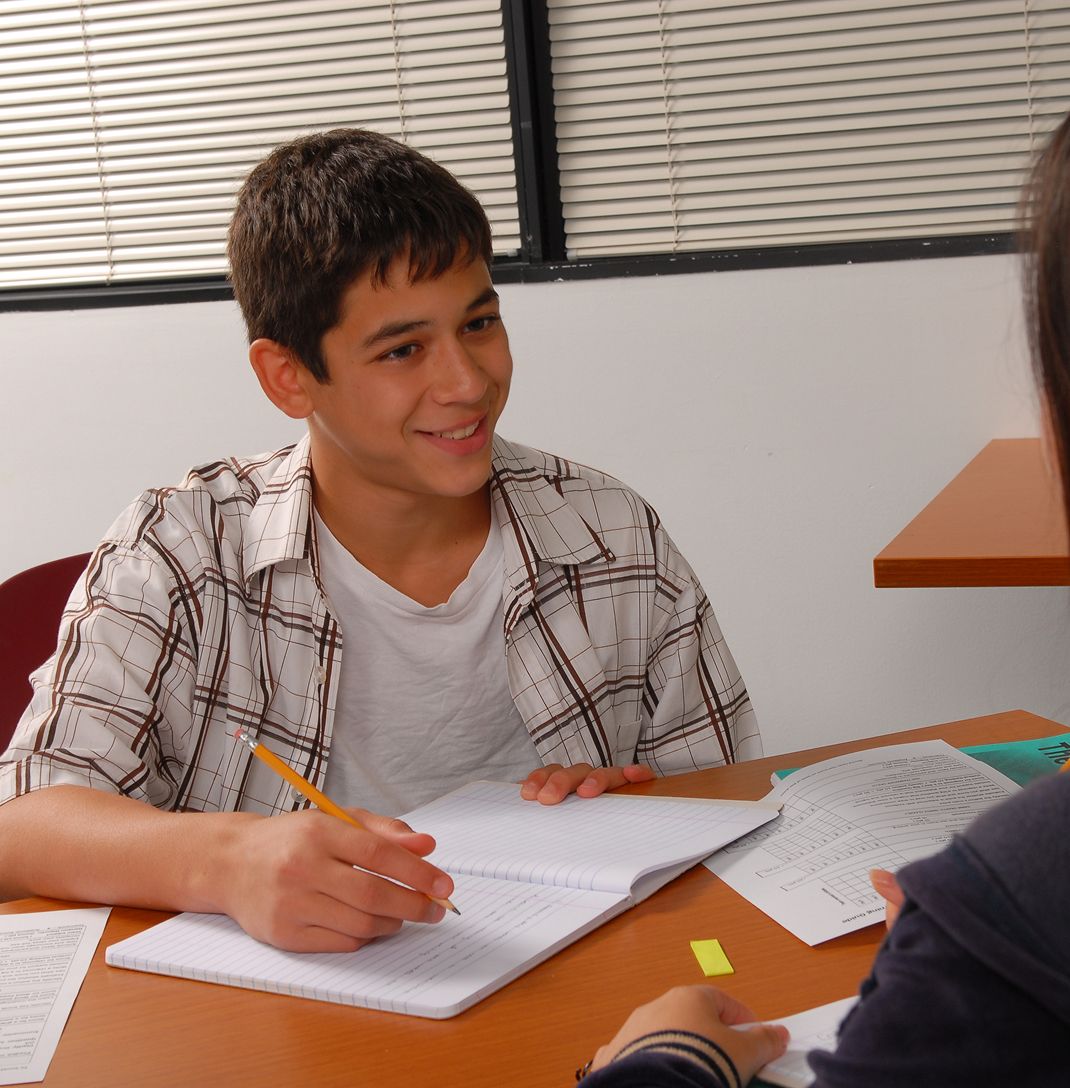
Team discussion, partner work, and structured cooperative learning routines keep every student actively engaged, building the academic conversation skills that transfer to every subject area.
Eight levels — from beginning to advanced

Levels 1–2
Beginning readers. Illustrated stories with phonetically regular text, building toward basic decoding and literal comprehension.

Levels 2–3
Developing readers. High-interest fiction, nonfiction, and Readers' Theatre to build decoding, fluency, vocabulary, and comprehension.

Levels 4–8+
Proficient to advanced readers. Short stories, novels, poetry, and nonfiction — with honors units that prepare students for AP-level work.

What a Reading Edge classroom looks like
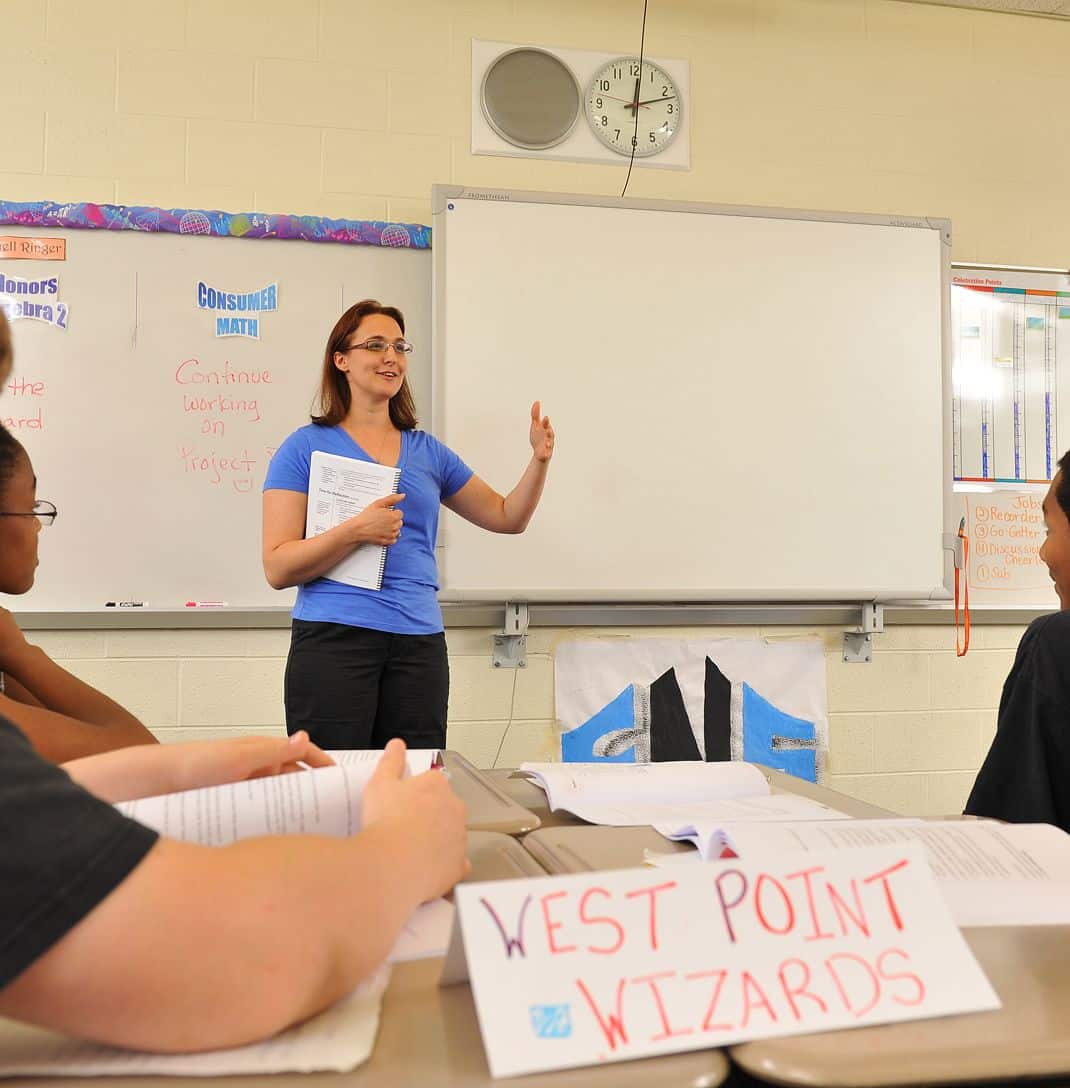
Every lesson follows the Cycle of Effective Instruction — explicit active instruction, structured team study, assessment of progress, and celebration of success. Students discuss, analyze, question, and work cooperatively to understand complex texts. No one is a passive observer.

"We feel like we have a common language. Never have I experienced a schoolwide laser focus on a specific area, where we're all looking at the same data, we're using the same tools, the same resources, just to drive one particular focus."
LaShauna H
SFA Facilitator, Detroit, MI
How The Reading Edge
connects to the rest of SFA
The Reading Edge picks up where Reading Wings leaves off and carries students through to high school readiness and beyond. Students who enter middle school below grade level have a clear, accelerated path forward. Students on or above grade level have honors-level instruction that prepares them for the most demanding coursework.
Learn more: SFA: Reading Wings| Curriculum Overview
Ready to bring SFA's complete literacy curriculum to your school?
Start a conversation to learn how the SFA model works, what implementation looks like, and whether your school qualifies for scholarship support.